

Most businesses that do SEO pour their time into keyword research and link building while ignoring one of the most effective SEO strategies as well: Schema Markup. This guide will walk you through exactly how to use schema markup to grow your search visibility, earn more clicks, and stay competitive in AI-powered search.
Schema markup is a type of code that you apply to your website that labels your content so search engines including AI systems can comprehend it correctly. Think of it as a translator between your website and the search engine like Google. Without the schema markup, search engines will infer what your content implies.
Schema markup works as a structured communication. You apply specific labels to your content using vocabulary from Schema.org, and search engines read those labels to display your page more prominently in results. This can appear as star ratings, FAQ dropdowns, prices, or service descriptions directly in the search results page, before a user even clicks.
Schema markup does not directly change your ranking position. It creates visibility advantages that standard listings simply cannot compete with, including richer search appearances and higher click-through rates.
SEO schema markup gives your website an edge because most competitors still don’t use it properly or ignore it completely. When you add schema to your service pages, blog posts, and business profile, you take up more space on search results, build trust, and make it easier for the right clients to find and choose you. Real-world results support this. Having rich result pages could earn up to 20 to 30% higher click-through rates compared to plain listings
Understanding the types of schema markup helps you prioritize where to start. Not every schema type applies to every business. Here are the most valuable ones for service providers:
Use this roadmap to decide what to implement first:
| Business Stage | Start With Schema | Purpose | Add Next Schema | Purpose |
|---|---|---|---|---|
| New website | Organization+LocalBusiness | Organization tells search engines your business name, logo, and contact details. LocalBusiness adds your service area, address, and hours so Google surfaces you in local searches. | Article | Labels your blog posts with author, publish date, and topic to build E-E-A-T signals from day one. |
| Active Blog | Article+FAQ | Article strengthens content authorship and freshness signals. FAQ expands your blog listings in search results with question-and-answer dropdowns, increasing clicks without extra ad spend. | Person | Attaches your name, credentials, and expertise directly to your content so search engines and AI systems recognize you as a trusted authority. |
| Service | Service + FAQ | Service describes exactly what you offer, including service name, description, and provider details, so AI tools and search engines stop guessing. FAQ on service pages addresses buyer objections directly in the SERP before the click. | BreadcrumbList | Supports site navigation schema markup by showing your site structure (e.g., Home > Services > SEO Services) inside search results, improving user trust and click-through rates. |
| Established Brand | All above + Breadcrumb | Combining all previous schema types creates a fully connected entity profile that search engines and AI platforms can map, cite, and trust consistently. | Website (Sitelinks search box) | Adds a search bar under your brand name in Google results, letting users search your site directly from the SERP and reinforcing your authority as an established destination. |
Implementing schema markup does not require advanced developer skills. You have four practical methods to choose from:
Schema markup JSON is the format Google recommends. You place a block of code inside the <head> tag of your page. Here is a simple FAQ schema example for a virtual assistant service page:
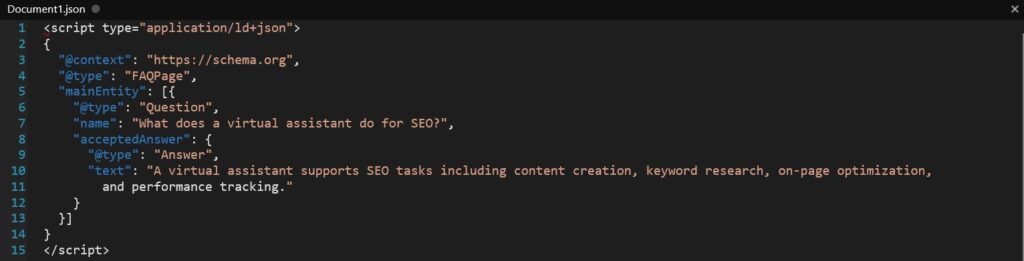
JSON schema markup works this way for every schema type. You swap the @type value and adjust the properties to match your content.
Plugins like Rank Math, Yoast SEO, and SchemaPro let you add schema through a visual interface. This is the fastest route for solo and non-technical website owners.
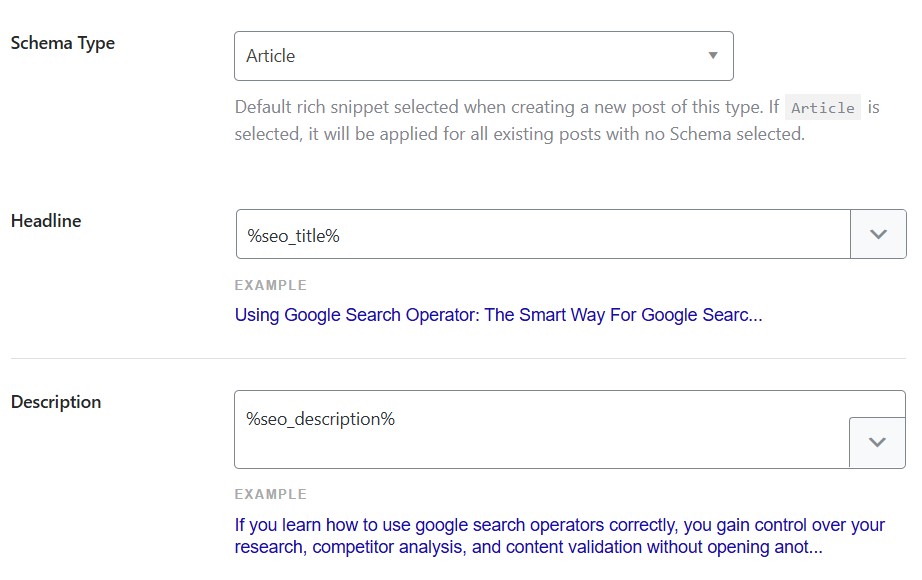
Add your JSON-LD code as a Custom HTML tag in GTM and publish it to specific pages. This works well for marketers managing multiple client websites.
After implementing schema, validate and track it consistently. Here are the tools to use:
Follow this 30-day monitoring schedule after your first implementation:
Getting schema on your site is only half the work. Implementing it incorrectly can cost you rich result eligibility and signal to Google that your content is untrustworthy. Avoid these common errors that cause Google to ignore or disqualify your schema:
Each of these mistakes is avoidable with a quick validation check and a habit of reviewing your schema every time you update a page. Getting this right from the start protects your visibility and keeps your structured data working in your favor long term.
Search behavior changed significantly with the rise of AI-powered results. Google AI Overviews, Bing Copilot, and other AI platforms pull content from websites they can interpret with confidence. Schema markup gives these systems the clear signals they need to cite your content accurately.
For service businesses, this creates a direct opportunity. Apply Article and Person schema to your blog posts to reinforce authorship and expertise. Use Service and FAQ schema on your core service pages so AI tools can extract and summarize your offerings clearly. Define your brand name, services, and business details in your Organization schema so AI models identify and reference you as a credible entity.
Most service businesses are not doing this yet. Getting ahead now means your content surfaces in AI answers while competitors remain invisible.
Schema markup is one of the few SEO strategies that works consistently across traditional search and AI-powered platforms. It takes a relatively small amount of time to set up, and the visibility gains compound over time.
If you want to move faster and make sure everything gets implemented correctly the first time, working with a hire SEO specialist is the smartest investment you can make. As a digital marketing VA with 8 years of experience, I offer SEO services that include full schema implementation, structured data audits, and ongoing technical optimization tailored for service businesses.
Ready to increase your search visibility?
Book a free discovery call and let’s map out exactly where schema markup fits into your growth strategy.