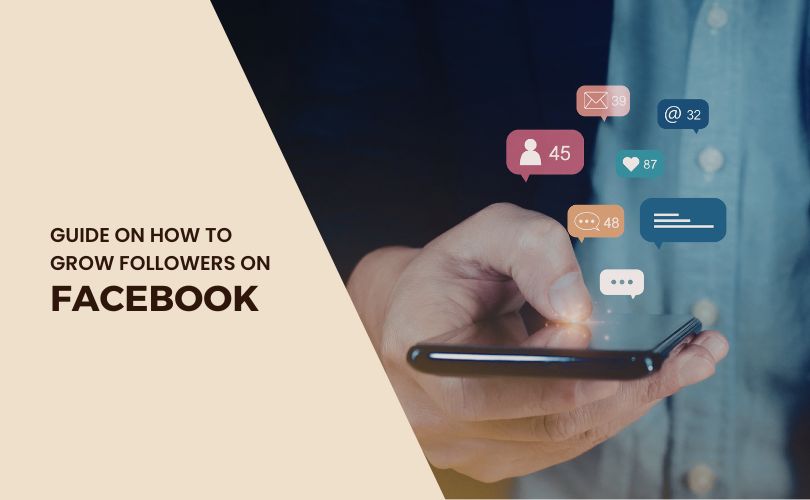
Facebook has over 3.07 billion monthly active users as of early 2026, that’s roughly 38% of the entire planet. And yet, most business pages reach barely 1–2% of their own followers with each post. But don’t worry, you’re not out of options. Growing your Facebook following is still very achievable in 2026. But the platform has changed significantly over the past year, and what worked in 2023 or 2024 can actually hurt your reach today. This guide covers both organic and paid strategies that are built specifically around how Facebook’s algorithm works right now.
There’s a persistent myth that Facebook is dead for organic reach. It’s not. What’s dead is the old strategy of posting anything and expecting it to reach people automatically.
The platform remains the #1 social media channel for users aged 25–44 in most markets, and Facebook referral traffic to external websites has actually rebounded in 2026, with some publishers reporting four times the traffic compared to 2025. Followers still matter for three reasons: organic reach (even at a low percentage, more followers means more eyeballs), custom audiences for retargeting ads, and social proof that converts cold visitors into buyers or clients.
The key shift is this: in 2026, the algorithm rewards engagement quality over follower quantity. A page with 2,000 highly engaged followers will consistently outperform a page with 20,000 passive ones. That means growing the right kind of followers where people who actually interact with your content is more valuable than chasing numbers.
Before diving into tactics, you need to understand the system you’re working with. Facebook’s algorithm is now a collection of AI-driven ranking systems that evaluate content across every surface: your main feed, Reels, Groups, and Stories.
At the core, it runs on a four-step process for every piece of content:
Source: Meta Ads
Three major changes in 2025–2026 directly affect how you grow followers:
An algorithm update in October 2025 now gives Reels uploaded on the same day they were created 50% more distribution than older content. This means scheduling Reels days in advance reduces their reach. The implication: upload your Reels fresh, the day you want them to go live.
Meta launched the User True Interest Survey (UTIS) model in January 2026. Instead of relying purely on passive engagement metrics (likes, views), Meta now surveys users directly in their feed, asking “How well does this video match your interests?” The model uses those responses to determine whether content genuinely aligns with what users care about — beyond just what they scroll past mindlessly. A/B testing across 10 million users showed a 5.4% increase in high satisfaction ratings and a 5.2% boost in total engagement after UTIS launched. The practical takeaway: generic content optimized purely for clicks is being deprioritized. Niche, specific, high-quality content that actually matches your audience’s real interests now gets a measurable boost.
As of mid-2025, up to 50% of the content in any user’s Facebook feed comes from accounts they don’t follow. The algorithm now functions more like an interest-based discovery engine than a follower-driven newsfeed. This is both a challenge and an opportunity: your content can reach completely new audiences if it matches their interest signals, even if they’ve never heard of your page before.
The flip side: private shares via Messenger or WhatsApp are now one of the strongest signals in the entire ranking system. When someone sends your post to a friend privately, the algorithm treats it as “essential” content and often triggers an immediate boost in broader distribution. Likes still count, but they’ve been eclipsed by saves, shares, and especially private sends.
These are free strategies that work with the 2026 algorithm, not against it. None of them require an ad budget. All of them require consistency. Consistency and clarity are the two qualities the algorithm rewards most reliably. If managing this feels overwhelming, investing in social media management services can help you stay consistent without burning out.
This sounds basic, but it’s where most pages lose followers before they’ve even had a chance to earn them. A half-complete page signals inactivity, and visitors leave without hitting follow. Here’s what a fully optimized page looks like in 2026:
Pro Tip: Make sure your bio keywords match the content you plan to post. If your page says “marketing tips” but you post about cooking, the algorithm can’t categorize you correctly, and your reach will suffer.
The 2026 algorithm uses your page’s content history to categorize it and match it to users with relevant interest signals. A page with no clear theme gets shown to no one in particular, which means it gets shown to almost no one at all. The fix is simple but requires discipline: write a one-sentence mission statement for your page and filter every single post through it. For example: “This page helps Filipino job seekers land better roles through smarter career positioning.” If a post doesn’t fit that statement, don’t publish it.
Audit your last 20 posts. Archive anything off-niche. Then go forward with a consistent theme. A tight niche means Facebook knows exactly which users to show your content to — and those users are far more likely to follow you because the content feels relevant to them.
Pro Tip: Posting only once about marketing and then switching to lifestyle content confuses the algorithm. Niche consistency is one of the fastest ways to accelerate the early stages of page growth.
This is not optional anymore. As of mid-2025, Meta unified all video content under the Reels category. If you’re not producing short-form video, you’re giving up the majority of your organic reach potential. Here’s what actually matters for Reels performance right now:
Pro Tip: Reels posted at the same time every day, even if less polished consistently outperform highly produced videos uploaded irregularly. Frequency and freshness beat production quality in the 2026 algorithm.
The 2026 algorithm now tailors visibility based on when individual users are most active, not just when your overall audience is online. That said, publishing at peak times still gives your content a head start in the early engagement window, which matters significantly for how far the algorithm distributes a post.
A recommended starting cadence is 3–5 posts per week. Consistent posting at lower volume beats irregular posting at high volume. Frequent low-quality posts can be flagged as “noise” by the algorithm, which reduces your overall page authority. Quality over quantity is not just good advice, it’s now algorithmically enforced. Use Facebook Insights (available free in Meta Business Suite) to find when your specific audience is most active. Early weekday mornings and weekend evenings tend to perform well broadly, but your page’s data will tell you more than any generic benchmark. Schedule posts using Meta Business Suite, Hootsuite, or Metricool to stay consistent without being online constantly
This is one of the most underutilized tactics for accelerating reach. When you reply to comments, Facebook interprets the continued activity as a signal that your post is generating genuine discussion and it boosts distribution in response.
The first six hours after publishing are the most critical window. Timely replies signal active discussion to the algorithm and give your post a meaningful ranking boost during that period. After the six-hour window, engagement still matters, but the compounding effect is smaller.
Practical habits that work:
Pro Tip: Getting your most loyal followers to comment early on a new post is one of the fastest ways to get the algorithm to push it further. Consider messaging your most engaged followers directly when you publish something important.
Facebook groups with active niche communities remain one of the highest-converting free traffic sources available. A well-timed, genuinely helpful post in the right group can drive dozens of new page followers in a single day.
The strategy: find 5–10 groups where your target audience is already active and engaged. Join them as your page or personal profile (depending on group rules), and share posts that provide real value such as tips, tools, insights, answers to common questions. Never post direct sales pitches. Let the page link in your profile or the post attribution do the work.
What to avoid:
Pro Tip: The best-performing group posts in 2026 are ones that start a conversation rather than just broadcast information. Ask the group a question that your page content answers — then people naturally visit your page to learn more.
In 2026, saves and private shares carry more algorithmic weight than likes or reactions. Designing your content to earn saves and shares (not just reactions) is one of the highest-leverage shifts you can make to your content strategy.
Content formats that drive shares:
Content formats that drive saves:
End every post with an implicit or explicit save prompt: “Save this before your next job application,” “Bookmark this for later,” or “Send this to a friend who needs to see it.” The last line of your caption is prime real estate, use it!
This is the simplest tactic and one of the most consistently overlooked. Facebook allows you to invite people who like or react to your posts to also follow your page. Do this regularly. It’s free and takes about two minutes per post.
Beyond that, make your Facebook page impossible to miss across every other channel you control:
One important caution: vary the frequency of your invitations. Inviting hundreds of people per day can trigger Facebook’s spam filters and temporarily block your ability to send invites. A reasonable pace is 20–50 per day.
Organic strategies build a foundation. Paid ads accelerate what’s already working. Used correctly with even a modest budget, Facebook ads can compress months of organic growth into a few weeks.
The most important thing to know before running a single dollar of ads: stop using the blue “Boost Post” button. It looks convenient, but it’s not optimized for audience building. It pushes your post to a broad, often poorly targeted audience and gives you minimal control over who sees it. Use Meta Ads Manager instead — it’s free to access and gives you full control over targeting, objectives, and budget.
Before spending money on clicks to your page or website, run a PPE campaign. This campaign objective is designed to get cheap likes, comments, shares, and saves on your best organic post. The goal is to build social proof on the post before it reaches new audiences. Use your best-performing organic post as the creative — ideally the carousel or video that already has real engagement.
Example targeting:
This campaign is cheap and builds the algorithm signals that make your future ads work better.
Once your PPE campaign has run for a few days, build a custom audience of people who engaged with your page in the last 30 days and people who watched 50% or more of your video. These are warm audiences — they already know your content. Now send them directly to your Gumroad or Payhip page with a traffic or conversion objective ad.
This two-step approach stretches a limited budget significantly further than running cold traffic ads from the start. The PPE campaign gathers cheap engagement data; the conversion campaign uses that data to reach people most likely to buy.
Pro Tip: Once you have 10 or more buyers, upload that list as a custom audience in Meta Ads Manager and use it to build a Lookalike Audience. This finds new people who share characteristics with your existing buyers — and it’s the most cost-effective way to scale Facebook ads at any budget level.
One more warning: never run ads to a page that looks inactive or incomplete. Before spending anything on paid promotion, make sure your page has a complete profile, a pinned post, and at least 5–10 recent posts with visible engagement. Paid traffic sent to a dead-looking page is wasted traffic.
Live video remains one of the formats Facebook pushes hardest in 2026. The algorithm notifies your existing followers when you go live — a form of free reach that no other content type gets. Use Live for Q&As, tutorials, behind-the-scenes sessions, or product walkthroughs. Even an unpolished 15-minute live session can outperform a highly produced pre-recorded video in terms of reach and new follower growth. The authenticity signal is strong.
Find non-competing pages in your niche with a similar or slightly larger audience and propose a mutual shoutout or collaboration. Tag each other in a value post, co-create a piece of content, or simply share each other’s best posts. This is the fastest organic way to reach a warm, niche-relevant audience that you’d otherwise have no access to. Micro-collaborations — with pages between 1,000 and 10,000 followers — often yield better conversion rates than big influencer partnerships because the audience is more engaged and the relationship feels more authentic.
Giveaways are low-cost and high-visibility when structured correctly. The entry requirement that drives the most qualified new followers is: “Follow this page and tag a friend who would find this useful.” This requirement filters for people who are actually interested in your niche, not just prize hunters. Run the giveaway for 5–7 days, cross-promote it on your other social platforms, and consider sharing it in relevant Facebook groups (where rules allow) for maximum reach.
With a consistent strategy — 3–5 posts per week, native video, and active community engagement — you can expect to see measurable follower growth within 60–90 days. The 2026 algorithm’s interest-driven discovery model means new pages can gain traction faster than before, especially if content is tightly niche-focused. That said, sustainable growth is a 3–6 month project, not a two-week sprint.
No. Buying followers inflates your numbers but destroys your engagement rate, which the algorithm uses to determine whether your content is worth distributing. A page with 10,000 fake followers and 0.1% engagement will reach fewer real people than a page with 500 genuine followers and 8% engagement. The damage is often permanent and very difficult to reverse.
Growing Facebook followers in 2026 is entirely achievable, but it requires understanding how the platform actually works today, not how it worked two or three years ago. The algorithm has shifted decisively toward interest-driven discovery, quality engagement signals, and native video. The pages that are growing fastest right now are not the ones with the biggest ad budgets. They’re the ones with the clearest niche, the most consistent publishing schedule, and the strongest community engagement.
If you’re starting out or starting over, pick one organic strategy from this guide and commit to it for 30 days before adding another. For most pages, that first strategy should be Reels — upload one fresh Reel every two days, engage every comment, and watch what your Insights tell you. Build from there. And if you’d rather have an expert handle the strategy and execution for you, a professional social media management service can take the guesswork out entirely.